

Alberta minister receives backlash online after land acknowledgement
Alberta’s Deputy Premier Mike Ellis kicked off an announcement about new provincial sheriffs legislation with an Indigenous land acknowledgement, sparking immediate online criticism.
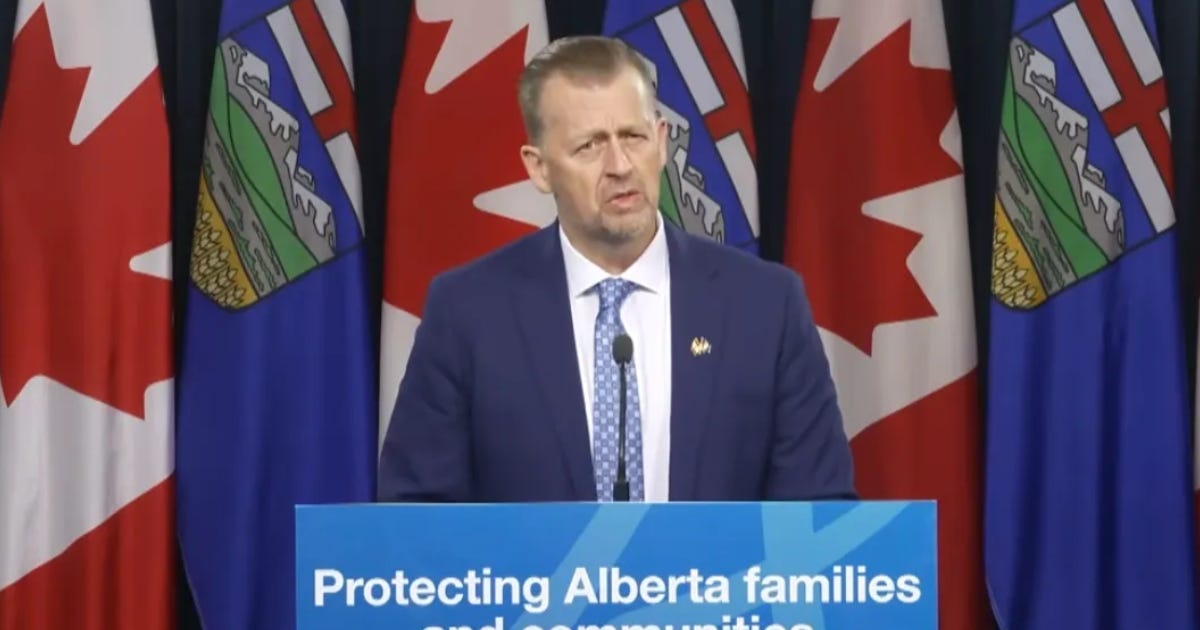
Alberta’s Deputy Premier and Public Safety Minister Mike Ellis kicked off an announcement about new provincial sheriffs legislation with an Indigenous land acknowledgement, sparking immediate online criticism.
Before noting a spike in violent and organized crime, Ellis began a press conference on Tuesday by acknowledging the Indigenous land he was speaking on. This sparked outrage online from people fatigued by institutions and governments declaring conflicting claims to the land.
“First I want to begin by acknowledging that we are gathered today on traditional territories of treaty six and of course acknowledge the Metis people of Alberta, of course, who share a deep connection to this land,” he said.

Rebel News first highlighted the land acknowledgement on X, sparking outrage from many conservative-aligned individuals on the platform. Some stated it was not a significant issue, while others blasted the government for the performative moment.
Conservative social media commentator “Mistersunshinebaby” posted the clip, implying Ellis was not truly “Conservative.”
One individual stated that Conservatives were just Liberals.
Another asserted that the Alberta land acknowledgement differed from those heard in other institutions across Canada.
“This is normal in Alberta. He acknowledges the “traditional” (past, historical) land inhabitants who came before, NOT that the land is unceded, as they do in other provinces,” one X user named “Natasha” said in the comments.
Neither the United Conservative Party of Alberta nor the Ministry of Public Safety in Alberta were immediately available for comment.
Irrelevant whether the land was ceded or not. The acknowledgement serves absolutely no purpose other than to bolster the view that it is somehow "their's". It is not. Which nomads roamed these lands 200 years ago has importance only as historical study; none otherwise.
Land acknowledgements are BS.
Should be grounds for immediate demotion or worse.
What a crock of shite.